

Sub-Total: $0.00
The Feeder Chronicles: Why Every Seed Is Worth It
Let me tell you about dusk.
The light goes amber. The yard goes quiet. And if you’re patient — if you’ve been patient for weeks, filling those feeders every few days, hauling bags of black oil sunflower seed from the truck, wiping down the suet cage, refilling the tube with millet — something happens.
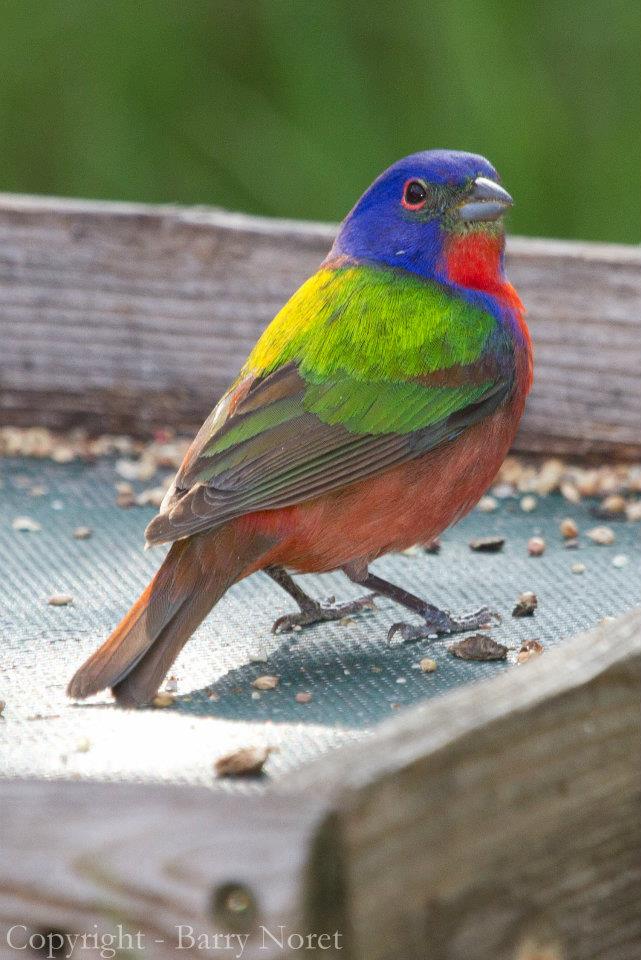
A flash of impossible color moves through the oaks at the edge of the yard. Blue head. Red chest. Green back. A bird that looks like someone spilled a paint set and the result turned out perfect.
The Painted Bunting arrives.
He drops to the feeder, unhurried, electric, and proceeds to eat like he owns the place. Because for that moment — he does.
That moment. That one quiet moment at dusk. It’s why I keep three feeders full year-round. It’s why I spend more on bird seed than I probably should. And it’s why, on the evenings when I’m standing at the back door watching him feed before he disappears into the dark, I feel something close to gratitude.
The Investment Nobody Warns You About
Let’s be honest: backyard bird feeding is not cheap.
A quality block feeder loaded with millet, milo, black oil sunflower seed, and nuts. A suet cage with fresh suet cakes. A tube feeder packed with millet mix. Refilled regularly. Fifty-two weeks a year. The math adds up quickly.
And then you watch twenty House Sparrows descend like a small, chirping mob and clean out what took you ten minutes to fill.
I know that moment. I’ve had that moment many times. The flash of frustration. The brief, irrational thought about whether any of this is worth it.
It is. Let me explain why.
The Case for Feeding Everyone
Here’s what the feeder purists get wrong.
Every bird that comes to your feeder matters. Yes, even the House Sparrows. Yes, even the Mourning Doves shuffling around underneath, hoovering up everything that falls. Yes, even the European Starlings — but hear me out.
Bird feeding isn’t a curated gallery experience. It’s a supplement. Your feeders don’t replace the habitat and natural food sources your local birds rely on — they add to them. Every seed a migratory warbler doesn’t have to burn energy searching for is energy it can use to complete its journey. Every calorie a resident Carolina Chickadee gets from your suet on a cold January morning is one it doesn’t have to find elsewhere.
The House Sparrows that drive you crazy? They’re feeding young. They’re surviving a world that has dramatically reduced their natural food sources through monoculture farming, suburban development, and pesticide use. A bird is a bird. Hunger is hunger.
Those “common” birds at your feeder — the doves, the sparrows, the starlings — they’re often the first birds that new birders notice. They’re the species that spark curiosity in a neighbor’s kid who wanders over to look. They’re the entry point into a world most people never discover. Common birds are not lesser birds. They’re gatekeepers.
The Occasional Magic
But here’s what nobody tells you when you set up your first feeder: the ordinary birds make the extraordinary ones possible.
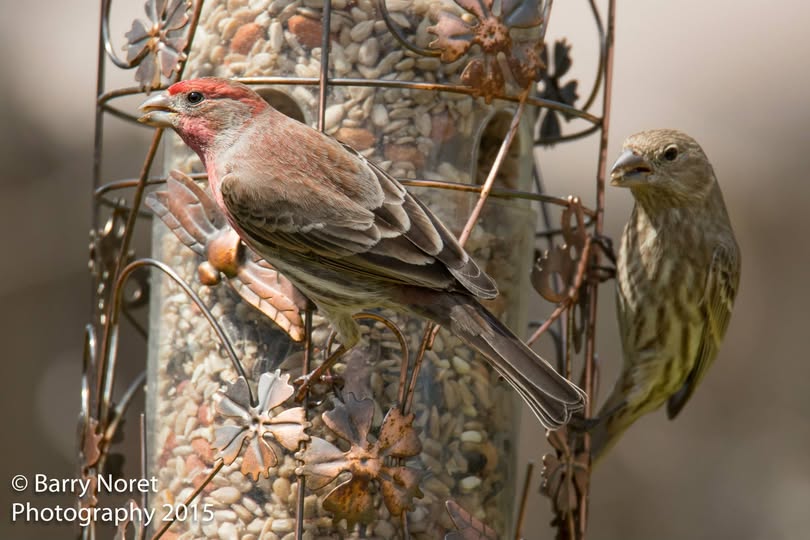
The Painted Bunting doesn’t appear out of nowhere. He appears because the feeder is there, because it’s reliable, because other birds have established it as a safe food source. The male Cardinal that feeds at 7 AM every morning is the ambassador that tells the rest of the neighborhood — including the rarer visitors — that this yard is trustworthy.
The rare birds find you because you put in the work for the common ones.
What to Feed and Why
Black Oil Sunflower Seed — The MVP. Cardinals, chickadees, nuthatches, House Finches, goldfinches, titmice, and more. If you only stock one thing, stock this.
Millet (White Proso) — Essential for sparrows, juncos, doves, and — critically — Painted Buntings and Indigo Buntings. This is the seed that brings the buntings.
Suet — Non-negotiable in winter, useful year-round. Woodpeckers, nuthatches, wrens, and chickadees all use it. Change it more frequently in summer — heat spoils it fast.
Milo (Sorghum) — Mostly eaten by doves, sparrows, and ground-feeding birds. Not the showstopper, but not wasted either.
Mixed Nuts and Chips — Attracts larger woodpeckers, Blue Jays, and Carolina Wrens.
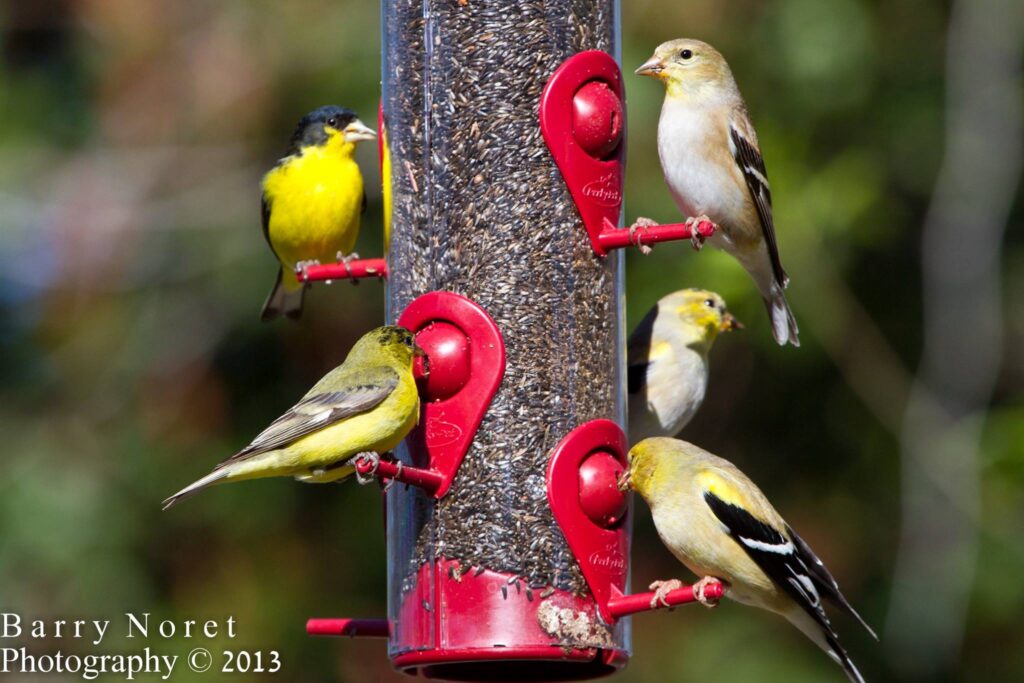
Nyjer (Thistle) Seed — Add a nyjer tube feeder. American Goldfinches will descend on it in numbers that will genuinely surprise you. Lesser Goldfinches too, especially in Texas.
Mealworms — This is the one that changes everything for insect-eating birds, and it’s underused. Live or dried mealworms in a shallow tray will bring Eastern Bluebirds in like a magnet. Once they find it, they’ll come every single day. Eastern Phoebes are regulars too, and during migration, mealworms attract species that would never touch a seed feeder: warblers, thrushes, wrens, and the occasional surprise. The reason is simple — protein. Seeds fuel a bird. Protein builds one. For nesting bluebirds feeding young, for migrants burning through muscle mass on a thousand-mile journey, mealworms aren’t a treat — they’re a lifeline.
Fresh Water — Underrated and underused. A reliable, clean water source — a birdbath with a dripper or bubbler — attracts more species than almost any food source. Many warblers, thrushes, and other migrants that would never touch a seed feeder will stop for water.
A Few Hard-Earned Tips
Location matters. Feeders within 3 feet of a window or more than 10 feet away cause fewer window strikes. Give your birds nearby cover — a shrub or small tree within 10-15 feet.
Cleanliness is non-negotiable. Dirty feeders spread disease. Rinse tube feeders monthly, scrub block feeders with a 10% bleach solution a few times per year.
Squirrels are going to happen. A baffle on the pole is the most effective solution. Cayenne pepper in the seed doesn’t hurt birds but deters most mammals.
Be consistent. Birds come to rely on established food sources. If you have to stop temporarily, taper down rather than stopping cold.
The Bigger Picture
Your feeders are a wildlife sanctuary. On a bad weather day when a migrating bird drops out of the sky exhausted and needs calories to continue north, your feeder is the difference between making it and not making it. On a winter morning when it’s 28 degrees and the ground is frozen, your suet cake is keeping a bird alive.
That’s not trivial. That’s conservation, one feeder at a time.
And then there’s that moment at dusk. The amber light. The impossible colors dropping from the oaks. The Painted Bunting taking his time at the millet tube while you stand at the back door and try to hold the moment still.
You earned that. Keep filling the feeders.
Happy birding, Texas!