Sub-Total: $0.00
July in Texas — The Shorebirds Are Already Coming Back
It’s the middle of summer. Triple digits. The grass is crispy. The cicadas are screaming. And out at Bolivar Flats, the shorebirds are already back.
You’d be forgiven for doing a double-take. Didn’t they just leave? Most of them passed through Texas heading north back in April and May. Some of them were here just eight weeks ago. Now they’re standing ankle-deep in the Gulf mud again, feeding like they’ve got somewhere to be.
They do. And they just came from somewhere extraordinary.
WHY JULY FEELS SO SOON
Here’s what makes shorebird migration one of the most mind-bending phenomena in the natural world: these birds breed in the Arctic — and the Arctic doesn’t give them much time.
The breeding season on the tundra is brutally short. Six to eight weeks, tops. The ground thaws, the flowers bloom, the insects hatch, and then it’s over. Birds that arrive in late May are already thinking about leaving by late June. (Birding Alaska is prime time must see!)
But here’s the part that stops me cold every time I think about it.
The females leave first.
In most shorebird species — dowitchers, Stilt Sandpipers, Dunlin — the female lays the eggs, and then she’s gone. The male takes over. He incubates the eggs, broods the chicks, and raises the family solo while the female is already winging her way back south.
Why? Pure energy economics. The female burns an enormous amount of her body’s resources producing those eggs. Some species lay clutches nearly equal to their own body weight. She needs to start refueling as soon as possible. The male “pays” for that head start by doing the parenting. They both get what they need — she gets recovery time, he gets to pass on his genes.
So those gorgeous rusty-colored sandpipers showing up at Hornsby Bend in the first week of July? Almost certainly females. Still in full breeding plumage. Just left the Arctic a few weeks ago, stopped over in Texas, and headed south to spend the winter in South America.
And no — they don’t breed again down there. The southern hemisphere is strictly recovery mode. Six months of eating, resting, and rebuilding for the next trip north. Their whole life is this loop: Texas to the Arctic to South America to Texas, twice a year, year after year.
Think about that the next time you see a Least Sandpiper in a mud puddle.
THE FIRST WAVE
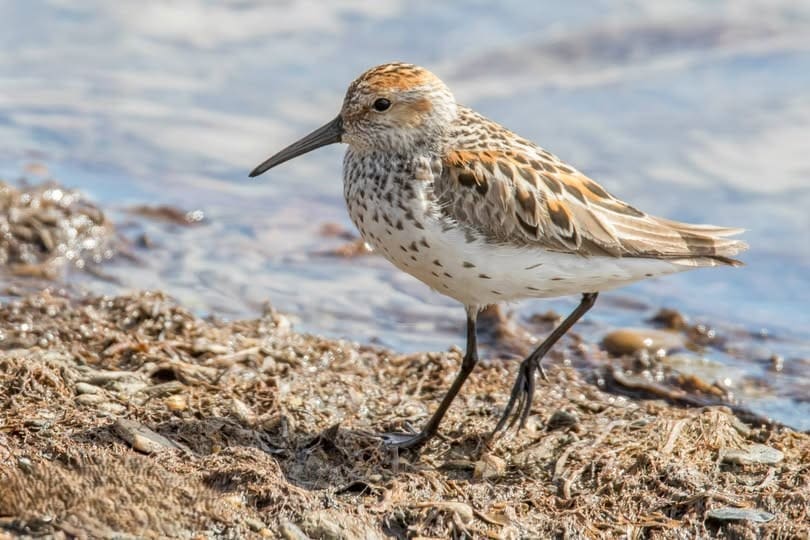
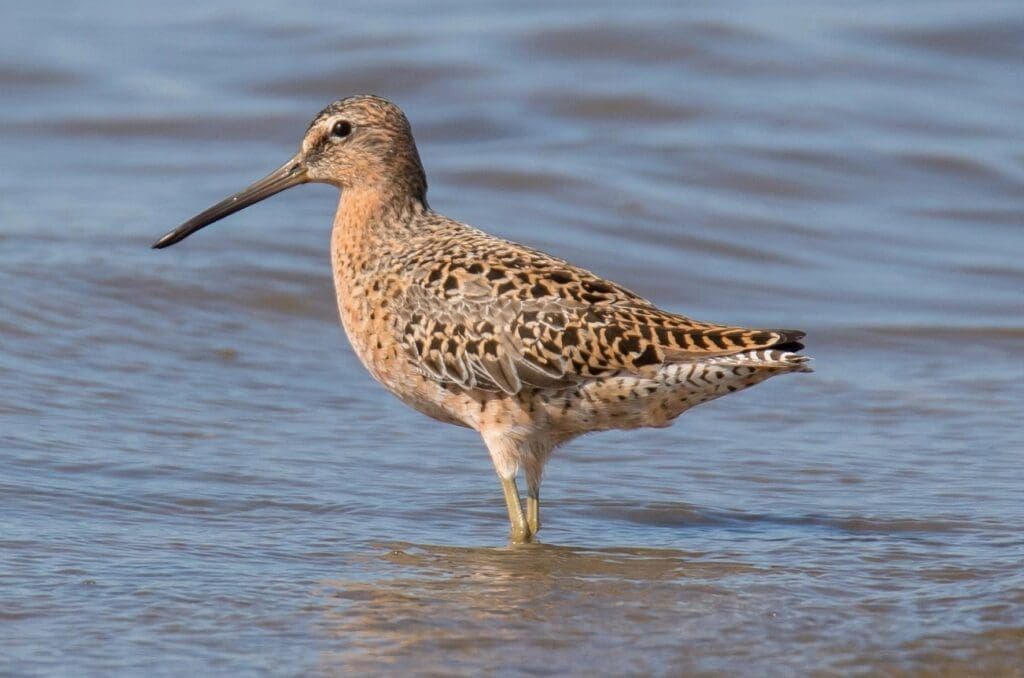
The Texas coast gets the first action. By late June, Western Sandpipers and Short-billed Dowitchers are already filtering back into Bolivar Flats and the South Padre mudflats. These are coastal specialists — they follow the Gulf shoreline south and tend to stick near saltwater habitat.
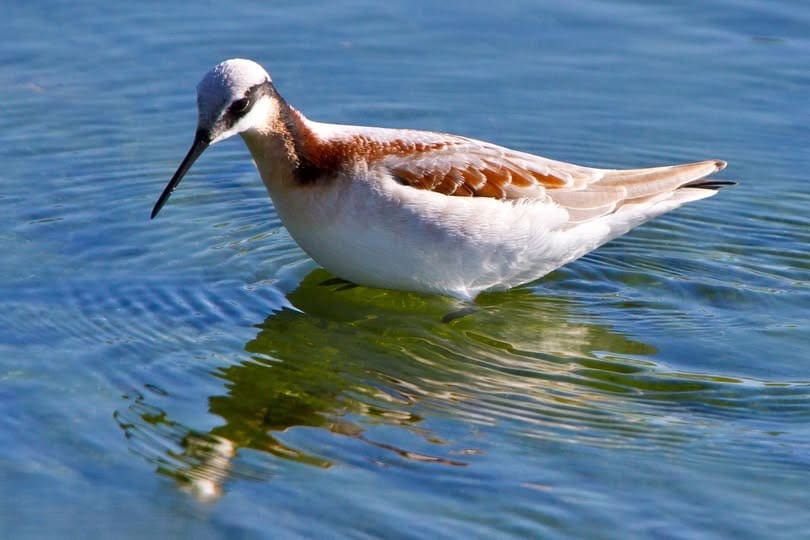
By early July the pace picks up. Least Sandpipers, Stilt Sandpipers, Semipalmated Sandpipers, Wilson’s Phalaropes. If you’ve never seen a Wilson’s Phalarope spinning in circles in shallow water, add it to your July list immediately.
Mid-July brings Semipalmated Plovers in numbers. By late July the flats can be absolutely covered.
But here’s something North Texas birders often don’t realize: you don’t have to drive to Galveston to see July shorebirds.
The interior of Texas has its own migration corridor. The Great Plains flyway runs straight through North Texas, and species like Upland Sandpiper, Pectoral Sandpiper, Stilt Sandpiper, and Buff-breasted Sandpiper don’t detour to the coast. They fly right through. Hagerman NWR at Lake Texoma, flooded agricultural fields, Lake Ray Roberts during drawdowns — these can all produce shorebirds in late June and early July that most Dallas birders assume are still months away.
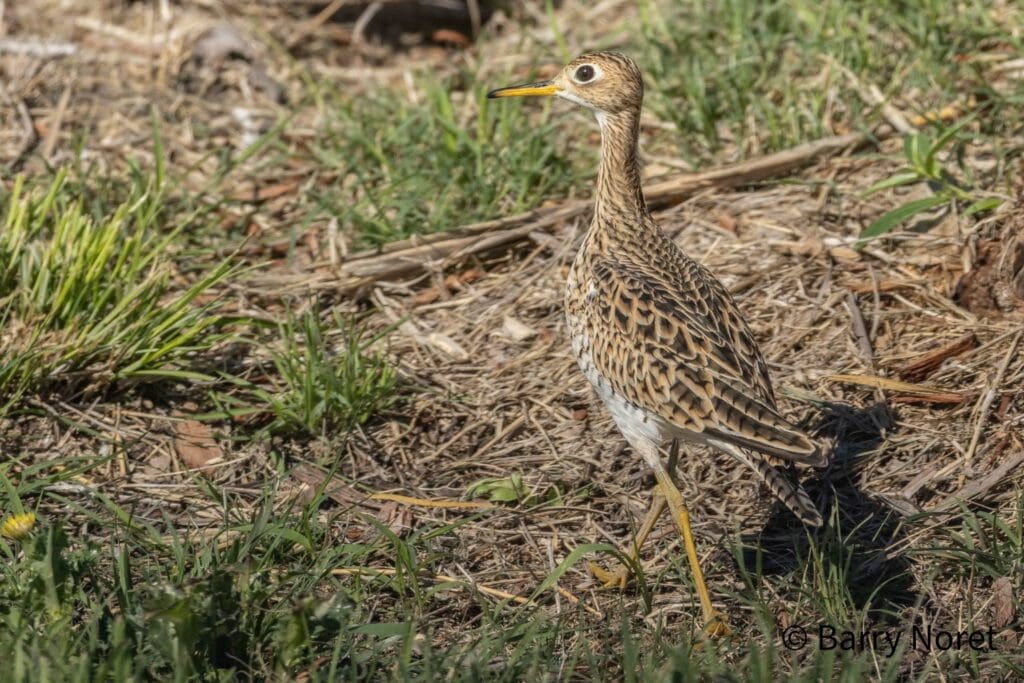
The Upland Sandpiper is the one I love most for this. It prefers grasslands, airports, and short-grass fields — not mudflats. And its call is one of the most evocative sounds in Texas birding: a long, liquid wolf-whistle that drifts across an open field and sounds like it came from another era entirely. If you hear it in early July, look up. It won’t be there long.
WHERE TO GO
If you can make the drive, Bolivar Flats Shorebird Sanctuary near Galveston is the single best shorebird spot in Texas. Go at low tide. Go early. Bring your scope.
South Padre Island — the flats near the Convention Centre, Laguna Atascosa NWR — runs a close second, especially for variety.
Inland, Hornsby Bend Bird Observatory in Austin is the best shorebird site in Central Texas. It’s a sewage treatment facility, which sounds unpleasant and is actually paradise. Walter Long Metropolitan Park and Granger Lake when water levels drop round out the Austin-area options.
In North Texas: Hagerman NWR is the anchor. Check Lake Ray Roberts and any flooded fields you can find after rain.
WHAT YOU’RE LOOKING AT
One thing that surprises people about July shorebirds: they’re not dull gray winter birds. Not yet. Adults returning in July are often still wearing their breeding plumage — rusty reds, bold streaks, rich chestnut tones. This is shorebirds at their most photogenic. Take advantage.
The “peeps” — the small sandpipers that look frustratingly similar — are a whole course of study on their own. Least, Semipalmated, Western. We’ll tackle that in another post.
For now, just get out there.
Most Texans write off July as dead season for birding. Too hot. Nothing moving.
But the shorebirds don’t care about the heat. They have a schedule to keep. A flyway to follow. Thousands of miles behind them and thousands more ahead.
They stopped here because Texas is part of the route. Has been for millions of years.
Go find them.
Have you started seeing shorebirds return yet? Drop a comment — I’d love to know where you’re finding them. Subscribe to Birds of Texas on YouTube and visit BirdsOfTexas.com.